







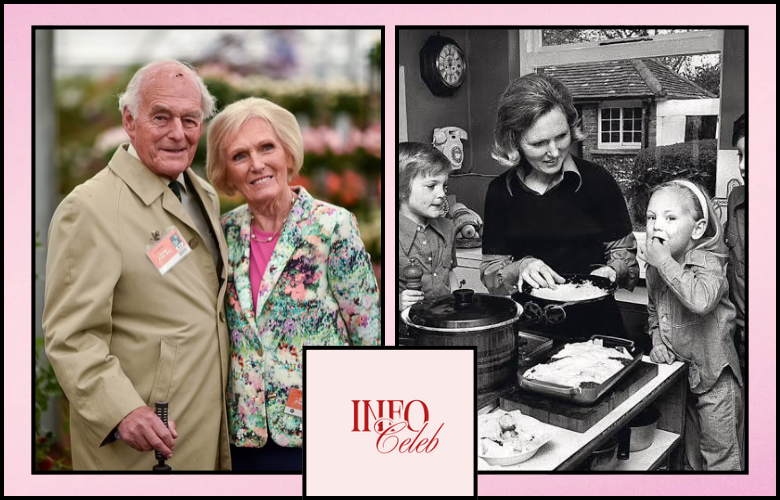
The night before she died, Mary Berry made lamb roast as it was her son’s favourite. William was a university student home for the weekend. In the morning, he was borrowing the family car for the newspapers, and he just didn’t return. More than 30 years on, the story still halts its readers in their scroll.
If you search for William John March, you’re probably searching for the boy, the subject of one of the gentlest of the most painful of things shared by the food and baker. We will tell what has been said, what can’t be confirmed, and how his name is often confused.
Why people search for William John March
The name has several derivatives, which adds to the confusion. One that appears in the most relevant search results is that of Mary Berry’s family. There are a few genealogy-type profiles that state that his first and middle name as her son is William “March”; however, the interviews and news articles about his passing are only referenced by William. An accurate name for him could not be verified.
The same applies to the detailed birth and death dates running across lumpy, low-quality pages. Those numbers are from collaboratively written third-party citations and not the family’s own interviews. The only things concrete are the year, 1989, and that he was 19. Another set of wanderers leads to American novelist William March, a much different writer. More on him below.
The family he belonged to
She has three children: Thomas, William and Annabel. She has been married to Paul Hunnings, whom she describes as her “rock”. According to her, “William was really fun, and everybody adored him. We kept saying how lucky we’d been to have him in our lives and how wonderful his life was, giving us all so much happiness.
He was doing business at Bristol Poly when he died. That’s virtually all of the public record of his everyday existence. The family has remained private about the rest, and that is, quite rightly, their business; it is only when you feel the urge to go searching that you should hang back. But in the interviews that have followed, one thing has cropped up several times: William loved rugby. His nephews who play the game still return from their matches and ask: Would William have been proud?
What happened in January 1989
The accounts line up well across interviews. William returned from university on a Friday night, and the family shared a meal, with Annabel and Thomas there too. On the Saturday morning he asked to borrow the car and was killed in a crash. His sister Annabel was in the passenger seat and survived.
Mary has described the moment she opened the door to a policeman. “You just know,” she said. At the hospital, staff asked whether she wanted to see him. She has said he looked beautiful. I am not going to dwell on the crash itself. No detailed official account has been published that I could verify, and speculating about the circumstances would add nothing except pain for a family that has been open about their grief without inviting that kind of attention.
How Mary Berry has spoken about it
It wasn’t always something she spoke openly about: over the years, William has come up in various contexts, and every time she gives a version of the story, with a slightly different nuance. There was a television documentary about her life, in which she described the weekend that William died in detail, and it’s said that viewers wept.
In a later interview, she said that William’s death gave her no choice but to lose weight: she lost a stone and a half and never regained it. In March 2025, close to her 90th birthday, she revisited it for a magazine feature. “It was as if no time had passed,” she said, “and it was strange to think William was dead so long ago”. She said something familiar to many bereaved parents: “that her family had been a cohesive unit up until those few hours”.
In a recent podcast about loss and grief, Mary said she never posed the question of “why” after William’s death. On the Sunday following the crash, she went to church and saw a plaque for a family who’d lost three sons in the First World War, and she marveled that anyone manages that. Mary’s attention turned instead to her other two children. She said that Annabel suffered the most as she’d been in the car.
Grief advice from someone who has lived it
Because she has been so candid, Mary’s remarks have taken on a quiet reassuring quality for people struggling with grief. She has been vocal about how the experience is uncharted territory for everyone, and that people react in their own way. Following William’s death, she says she didn’t want to get out of the house or see anybody. A neighbour took her along to the Chelsea Flower Show weeks later; the community came together.
Her tip is that you should speak to anyone distressed about having lost someone and tell them about the good times and their lovely qualities in an effort to encourage a smile. It is a simple concept and one that explains why the family still speak his name so naturally. They have decided to keep William very much a part of their lives.
Not to be confused with William March, the author
If you’re here for the author, here’s the story in brief: William March was born William Edward Campbell in Mobile, Alabama, in 1893. An American novelist, he authored six novels and four collections of short stories, and though he was never a massive hit with the literary masses, he was warmly received by the critics. His final novel, The Bad Seed, was published in 1954, the year he died. He served in the U.S. Marines in the First World War.
His biographer Roy Simmonds gave his own Life story the title, The Two Worlds of William March. His epic stories, Company K and The Looking-Glass, seem to be mostly forgotten. March has no relation to Mary Berry’s family, though you wouldn’t know that from some automatically generated pages. Several of those pages conflate the two men, which is why you’ll read about a decorated Marine who was injured in a car crash in Buckinghamshire. They are two separate men, born almost 80 years apart.
What can’t be confirmed?
A few things are worth stating plainly, since the name attracts guesswork:
- His exact full name, including whether “March” is a middle name, is not confirmed in any major interview or report I found.
- Specific dates and places of birth appear on genealogy-style pages but not in mainstream coverage.
- Details of the crash itself have not been officially published in a way I could verify.
- Anything he had learned about himself that was not found on the family’s section, such as his friends, plans, or even career ambitions.
What to do if the page has claimed to know more. What evidence have you got that you need to tap this page?
Why his story still resonates
It’s been unearthed again, for one thing, not because of celebrity interest. Mary Berry is bright, sunny, safe: she makes a good sponge, a happy hand and a woman who winks all the time. What the William story reveals is: who was she beneath that? A woman who’d spent her life caring for others could not protect her own family, for a weekend in 1989.
The rest of William John March’s story, within the limits that even this is being told, is largely the story of the 19-year-old who is loved, and of the mother who elected to her own great grief that remembering him shall, in the end, be a joyful thing. That’s perhaps the best that can be gained from it.
Frequently Asked Questions (FAQS)
Who was William John March in relation to Mary Berry?
The name is associated with Mary Berry’s son William, who died in 1989 aged 19. His full name is not confirmed in major interviews, which refer to him simply as William. He had a brother, Thomas, and a sister, Annabel.
How did Mary Berry’s son William die?
He died in a car crash in January 1989 while visiting home from university. He had borrowed the family car. His sister Annabel, who was a passenger, survived. Apart from this, no documented narrative has been confirmed.
What age was William when he passed away?
William was 19. He had been studying business at Bristol Poly and was back home visiting family for the weekend. In every interview she has given about him, whether on television, in print or on podcasts, Mary Berry has given the same age.
Does Mary Berry talk openly about her son’s death?
She does. In the years since, she has recounted the story in her own documentary about her life, in a 2025 magazine article, and in interviews about grief on a podcast. When she talks about William, she’s generally fond of him, and talks frequently about how her family keeps him close.
Are William John March and the writer William March the same man?
They are not. The novelist William March (born William Edward Campbell) was an American author who died in 1954 and was most well-known for The Bad Seed. He has no connection to Mary Berry’s son, though a few poor-quality pages mistakenly mix the two.


